July 11, 2026
People pay to watch horror movies, seek out ghost footage, and trade grotesque, unsettling stories.
Why do we willingly watch things that frighten us?
Horror is more than entertainment designed to make us jump. It gives an era's vague anxieties concrete forms: monsters, ghosts, killers, infections, and enclosed spaces. Anxiety in real life can feel too vast and complicated to make sense of. On screen, it has a face, a set of rules, and an ending.
We sit somewhere safe, choose fear, endure it, and emerge on the other side. Research suggests that the pleasure of fear does not simply rise with its intensity; it peaks at a moderate, manageable level. Horror can therefore work as a kind of "controlled fear experience," allowing us to encounter and rehearse an uncertain threat in a safe environment. That idea also helps explain why horror's monsters and settings change from one era to the next. Instead of directly copying what people fear, horror translates how people of a particular time experience fear into the language of the genre.
In this essay, I want to trace those changes across eight generations of horror cinema.
| Generation | Period | Focus of fear |
|---|---|---|
| Gen 1 | 1920s–1930s | Classic monsters and uncertainty over what counts as human |
| Gen 2 | 1940s–1950s | War, the atom, the Cold War, and unseen infiltration |
| Gen 3 | 1960s–1970s | The breakdown of trust in family, religion, and the neighborhood |
| Gen 4 | late 1970s–mid 1990s | Youth culture and the endlessly recycled killer |
| Gen 5 | late 1990s–mid 2000s | Media as a doorway for fear |
| Gen 6 | mid 2000s–early 2010s | Losing control of the body and the ability to choose |
| Gen 7 | 2010s | Trauma, identity, and social structures |
| Gen 8 | 2020s onward | Fear as the collapse of reality's rules and meaning |
In this framework, one generation never completely replaces the fears of the last. Slashers and ghost stories are still being made in the 2020s, just as psychological and social horror existed in the 1930s.
By "generation," I mean the dominant grammar of fear that spoke most powerfully to the public anxieties of a particular period.
Generation 1: Classic Monsters and the Fear of What Counts as Human
1920s–1930s
Did war and poverty create these monsters?
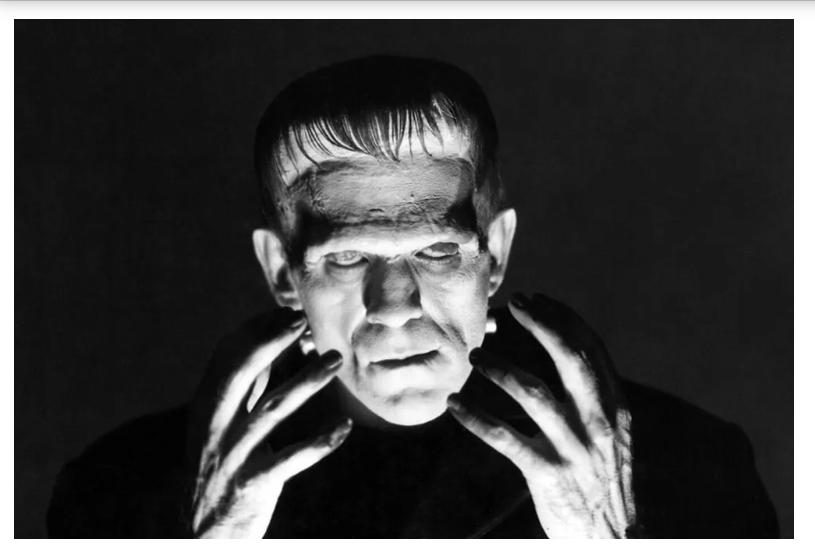
The 1920s and 1930s gave us films such as The Cabinet of Dr. Caligari, Nosferatu, Dracula, Frankenstein, and Dr. Jekyll and Mr. Hyde.
It is tempting to say that this era simply turned the anxieties of World War I and the Great Depression into monsters. But a direct equation—"Frankenstein was made because of the war, and Dracula became popular because of poverty"—is far too simple.
Frankenstein was first published in 1818, and Dracula in 1897. Both monsters predate World War I. Rather than inventing new creatures solely from contemporary anxieties, the films of the 1920s and 1930s reintroduced postwar audiences to fears of science, disease, sexuality, class, and outsiders that had accumulated throughout nineteenth-century Gothic literature.
Expressionist cinema emerged from the instability of post–World War I Germany. In place of realistic space, it used warped buildings, tilted walls, exaggerated shadows, and distorted perspective. The world had not literally bent; the scenery expressed the feeling that, after the war, the world could no longer be experienced as normal. The BFI likewise links the rise of Expressionist horror to the anxious mood of the postwar Weimar era.
Did wounded veterans give Frankenstein's monster new meaning?
Frankenstein's monster is assembled from parts of multiple corpses. His visibly stitched face and unnatural body may have resonated with images familiar to post–World War I audiences: veterans living with amputations, burns, and facial disfigurement.
The shells and bullets of World War I did leave soldiers with severe facial injuries. Britain established specialized hospitals to treat facial casualties, and prosthetic masks were made to cover damaged areas. Even so, Frankenstein's monster cannot be read as a direct symbol of the veteran, since the original novel predates the war by nearly a century. It is more accurate to say that the monster's mutilated, reassembled body took on new resonance in a postwar society confronted by real damaged bodies.
The fundamental fear in Frankenstein is the idea that science can assemble life.
Is a human a sacred being with a soul, or matter composed of various organs and body parts? Does a scientist have the right to make life? What happens if he does not take responsibility for the life he has created?
The monster is not born evil. He becomes violent after his creator abandons him and other people reject him. The fear in Frankenstein, then, comes from more than the creature's appearance. It comes from a being created by society, denied responsibility and care, and ultimately driven to strike back at that society.
We fear the monster and pity him at the same time. Those responses cannot be separated, because he is not wholly unlike us; he is someone people have refused to recognize as human.
Dracula: the past that refuses to die, and desire that spreads
Dracula carries even more anxieties in a single body than Frankenstein's monster does.
He is an aristocrat in an ancient castle, a piece of the past that refuses to die. Modern cities and civil society may have flourished, but an undiminished feudal power returns to the present. In that sense, Dracula embodies the fear that a past believed dead can return to rule the present.
He is also a foreigner entering English society. He does not arrive at the head of an army; he buys a house, seduces people, and slips into bedrooms, families, and bloodlines. Dracula therefore taps into a fear of infiltration: the unfamiliar outsider contaminating a community from within.
Vampirism evokes infection and sexual desire at once. A victim is drained of blood, and anyone bitten may become a vampire in turn. Dracula has long been read as a story that concentrates anxieties about disease, blood, lineage, sexual desire, gender norms, and outsiders.
How Gen 1 horror blurred the boundaries
The monsters of the first generation all stand at the boundary between the human and the non-human.
- Dracula stands between the living and the dead.
- Frankenstein's monster stands between human and artificial life.
- The werewolf stands between the civilized man and the beast.
- Jekyll and Hyde stand between the upright citizen and the repressed criminal.
- The mummy stands between the dead past and the living present.
The defining fear of this era is not simply the act of turning war or poverty into a monster and then defeating it.
Through the monster's body, audiences confronted the anxiety that the boundaries of humanity, life, desire, and death were no longer secure. Defeating the creature might restore order for a moment, but the monster still revealed everything the human self had repressed or cast aside.
Representative works include The Cabinet of Dr. Caligari (1920), Nosferatu (1922), Dracula (1931), Frankenstein (1931), Dr. Jekyll and Mr. Hyde (1931), and The Mummy (1932).
Generation 2: War, the Atom, the Cold War, and the Fear of Infiltration
1940s–1950s
How do you fear what you cannot see?
After World War II, humanity knew that the atomic bomb could destroy entire cities. Soon the Cold War between the United States and the Soviet Union, the nuclear arms race, radioactive fallout, McCarthyism, and ideological scrutiny became part of everyday anxiety.
Nuclear fission, radiation, and ideology cannot be seen with the naked eye. Nor can you identify a communist by appearance alone. Horror and science-fiction films of the 1950s gave these invisible threats visible bodies: giant monsters, aliens, mutant insects, and human duplicates.
Alien invasions and nuclear war appeared in American films with unprecedented frequency. Invasion of the Body Snatchers, in which ordinary townspeople are replaced by emotionless duplicates, can be read as a fear of communist infiltration. It can also be read as a response to McCarthyite pressure and mass conformity. The BFI argues that 1950s science fiction externalized Cold War anxieties about destruction and conformity as large, visible threats.
What did the giant monster represent?
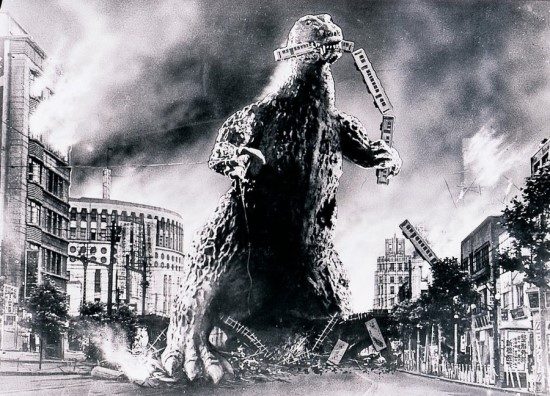
The creature in Godzilla is more than an animal smashing cities. It compresses the atomic bomb, nuclear testing, and radiation damage into a single body.
The real damage caused by nuclear weapons is vast and complex. Nations, militaries, science, technology, and international politics are so entangled that no individual can fight the threat directly. A monster, however, has a location, a size, and a weak point. People can track its movements, study it, build weapons, and respond.
The monsters of this period therefore offered the public not just fear, but a paradoxical sense of relief.
Nuclear war is vague, but the monster is visible.
Radiation cannot be grasped by hand, but a mutant creature can be attacked.
By simplifying a real threat, the film lets its audience briefly recover a sense of control.
What changed from Gen 1?
If Gen 1 monsters destabilized the boundary between human and non-human, Gen 2 monsters breached the boundaries of nations and communities.
Fear moved out of the castle, tomb, and laboratory and into entire cities and nations. The threat now extended beyond any single life to human society and civilization as a whole.
At the same time, films such as Invasion of the Body Snatchers suggested that the threat might already be inside the community. The people around you may look like family and neighbors while actually being something else, stripped of emotion and individuality.
These films ask their audiences:
Is the person next to me really the person I knew?
Can I remain myself within the group?
Do the state and science protect humanity, or destroy it?
Representative works include Godzilla (1954), Them! (1954), The War of the Worlds (1953), Invasion of the Body Snatchers (1956), and The Fly (1958).
Generation 3: The Collapse of Family, Religion, and the Neighborhood
1960s–1970s
Fear moves from the nation into the home
In the 1960s and 1970s, social shocks followed one after another: the Vietnam War, the civil rights movement, political assassinations, generational conflict, and the Watergate scandal. Television news delivered images of war, protest, and violence into the home.
The defining change of this period was not simply that movies became more violent. It was that people found it harder to place the same trust in established authorities—the state, religion, family, and the police.
Where Gen 2 horror showed aliens and monsters attacking nations or all of humanity, Gen 3 brought the threat much closer.
- The son inside the house may be a murderer.
- The neighbor may turn into a zombie.
- The family may be a cannibalistic group of killers.
- A young child may be possessed by an evil spirit.
- Pregnancy and childbirth may be drawn into a conspiracy beyond the individual's control.
The threat shrank in scale, but psychologically it moved much closer.
Family and religion stop feeling like sanctuaries
Rosemary's Baby and The Exorcist placed pregnancy, motherhood, children, and religion at the center of fear. Institutions and experiences that had represented protection and purity became the very places where evil took hold.
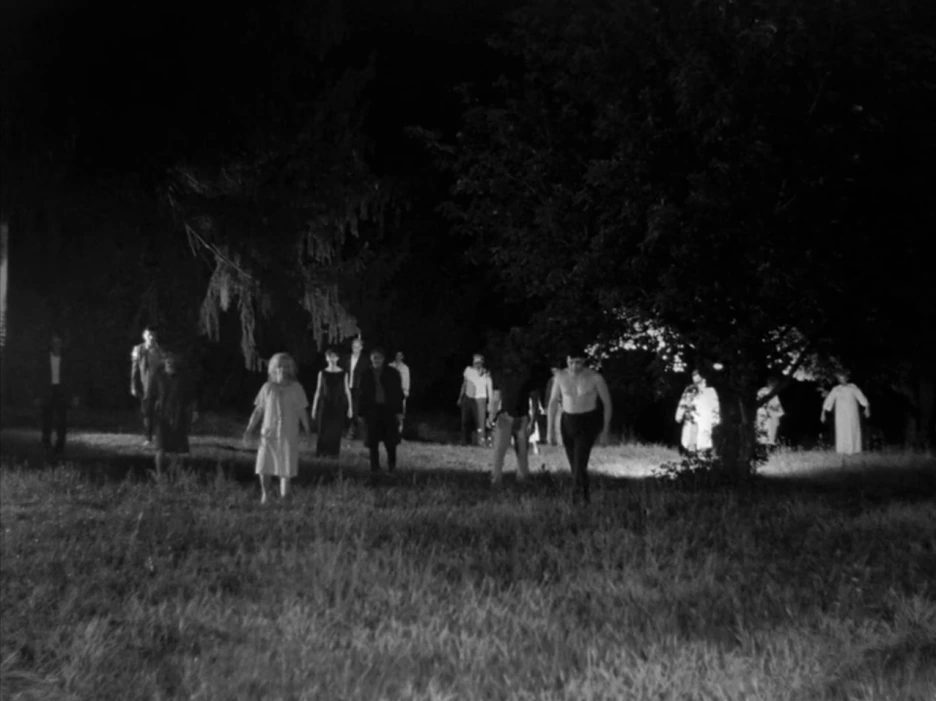
In The Texas Chain Saw Massacre, the family is not a source of safety but a group that perpetuates violence. In Night of the Living Dead, people battle zombies but fail to cooperate, and human violence ultimately takes the protagonist's life.
Night of the Living Dead not only changed the grammar of the modern zombie film; it is also regarded as a turning point that brought race, social division, and the failure of human groups into the horror genre.
Looser censorship changes what films can show
As film production codes weakened and independent cinema grew, filmmakers could depict bodily mutilation, religious blasphemy, and violence within the family more directly than before.
That does not mean films suddenly became socially engaged because censorship weakened. Rather, existing anxieties no longer had to be concealed, so fear could appear in more direct and realistic forms.
The fear of this era can be summed up this way:
Danger is not only in a distant nation or in outer space.
The home, family, neighbors, and religion I trusted and relied on may not protect me either.
If Gen 1 questioned what it meant to be human, and Gen 2 questioned who the community's enemy was, Gen 3 made us doubt the intimate relationships that hold the community together.
Representative works include Psycho (1960), Rosemary's Baby (1968), Night of the Living Dead (1968), The Exorcist (1973), The Texas Chain Saw Massacre (1974), The Omen (1976), and Suspiria (1977).
Generation 4: Youth Culture and the Endlessly Recycled Killer
Late 1970s–mid 1990s
Teenagers become both the stars and the consumers of horror
As slashers surged in popularity after Halloween, teenagers and young adults moved to the center of horror.
Places beyond adult supervision—summer camps, high schools, suburban homes, parties, and retreats—became the main settings. Parents and police were incompetent or arrived too late, leaving teenagers to survive on their own. A Library of Congress essay on A Nightmare on Elm Street likewise identifies teens isolated from adult supervision and ineffective authority figures as key elements of the 1980s slasher. Still, calling this period simply the era of "youth culture" would miss an important contradiction. Within the films, teenage drinking and sexual activity often functioned as signals that punishment was coming. Outside the films, teenagers and other young viewers were the very audience that embraced and popularized the genre.
The slasher, in other words, contains an intriguing contradiction.
Inside the film, teenagers are punished.
Outside the film, teenagers made those films hits.
VHS turns fear into a repeatable product
Home video and rental stores transformed the way audiences consumed horror.
Movies that once disappeared after their theatrical runs could now be rented, rewound, and watched repeatedly with friends at home. Home video helped recirculate older horror films among new generations. Killers such as Michael Myers, Jason Voorhees, and Freddy Krueger stopped being villains confined to a single movie and became brands that returned again and again.
Because the killer never dies for good, the sequels keep coming, and audiences begin anticipating the methods and rules of the next installment. Fear becomes both a reenactment of real danger and a repeatable experience, something closer to an amusement-park ride.
The pleasure of predicting fear
Over time, slasher audiences learned the genre's rules.
- A character who moves alone is in danger.
- If you don't check the body, the killer rises again.
- The car won't start at the decisive moment.
- There is a character who survives to the very end.
- The killer's death is usually not a final death.
The audience is frightened even as it predicts the next scene. Fear begins to function like both a puzzle and a game.
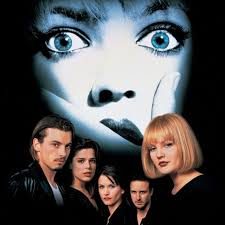
In the 1990s, Scream brought that learned genre knowledge into the movie itself. Its characters openly recite the rules for surviving a horror film, so they and the audience share the same vocabulary. The slasher's grammar had become common knowledge in popular culture.
Still, Gen 4 was about more than thrill-seeking amid material abundance. Body-horror films such as The Thing and The Fly contain anxieties about infection, disease, sexuality, and physical transformation. A Nightmare on Elm Street stages a generational conflict in which the crimes hidden by parents return in their children's dreams.
Representative works include Halloween (1978), Friday the 13th (1980), The Thing (1982), Videodrome (1983), A Nightmare on Elm Street (1984), The Fly (1986), and Scream (1996).
Generation 5: When Media Becomes a Doorway for Fear
Late 1990s–mid 2000s
Technology is not just the carrier; it becomes the doorway
By the late 1990s, video cameras, mobile phones, the internet, and personal computers had become part of everyday life.
These new technologies promised to connect people, transmit information, and record reality. Horror films turned each promise on its head.
- Watch the videotape and you are cursed.
- A photograph captures a dead person.
- A phone call tells you when you will die.
- The more people connect to the internet, the more isolated they become.
- A camera captures a presence invisible to the naked eye.
The defining idea of this era is not simply that "new technology is scary."
It is the sense that a medium trusted as a window onto reality has become a door through which fear can enter.
Media as infection in Ringu and Pulse
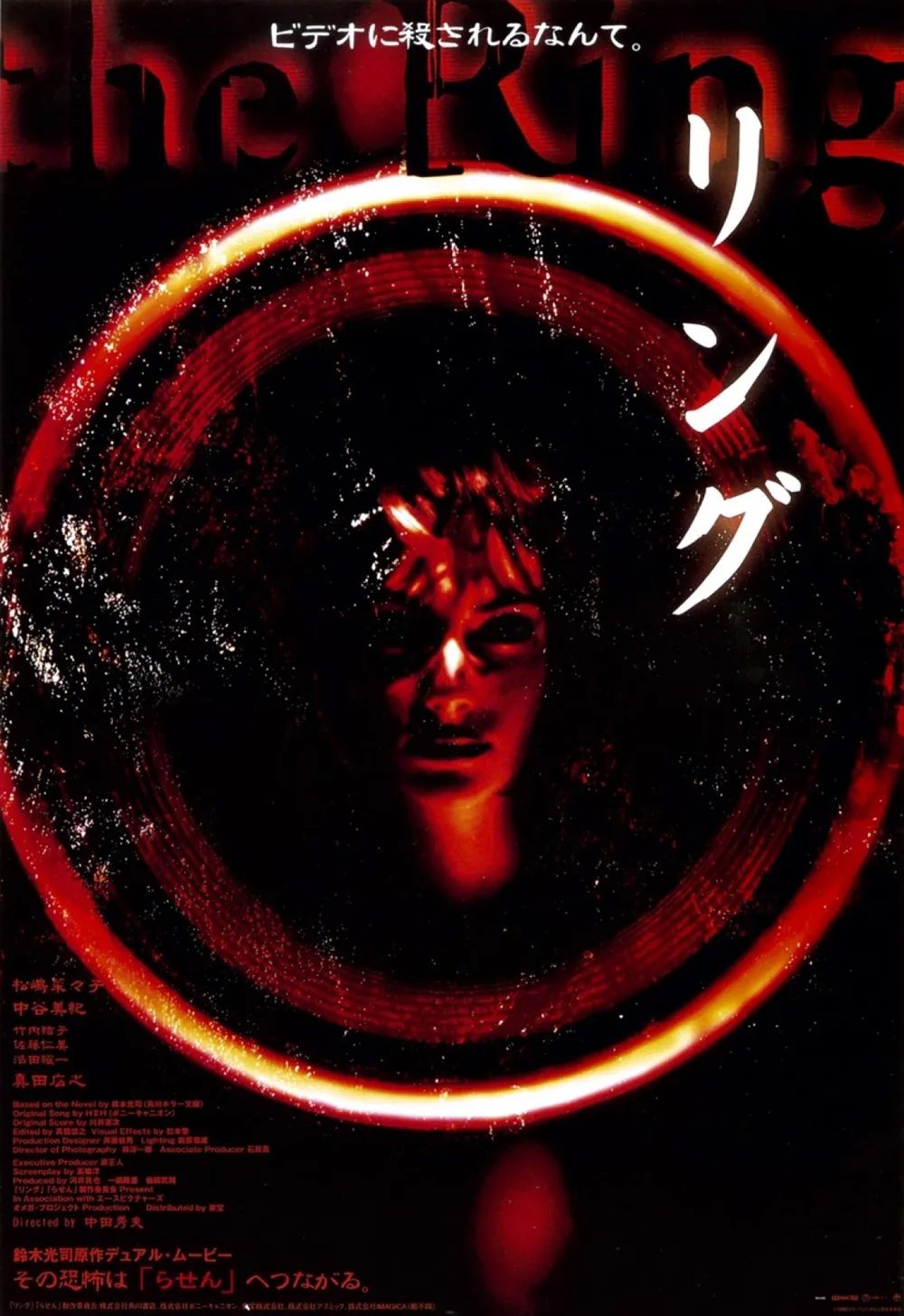
In Ringu, a curse reproduces through a videotape. To escape it, you must show the video to someone else. Fear spreads like a virus by exploiting the medium's capacity for copying.
In Pulse, the internet does not bring people together. Instead, it erodes the boundary between the living and the dead, and greater connectivity only makes people lonelier. Researchers have analyzed Pulse as techno-horror that uses sound and image to express the technological anxiety and isolation of a society coming online. Japanese horror of this period did more than place traditional ghosts inside modern machines. By making ghosts operate through video, telephones, photographs, and the internet, these films changed the speed and reach of fear itself.
Earlier ghosts were bound to particular houses or places. A ghost inside a medium can be copied, transmitted, and carried across borders.
Does the camera prove the truth?
The Blair Witch Project presents itself less as a finished film than as footage left behind by people who disappeared.
In found footage, audiences can see only what the camera captures. They cannot know what lies outside the frame, and when the operator panics, the image shakes with them. The camera appears to offer objective evidence, but it actually imposes severe limits on what the audience can see.
The audience is left asking:
Is this footage real?
Is what was recorded evidence, or staging?
If something is not visible on screen, does it exist?
Does the camera protect me, or expose me to danger?
Gen 5 horror laid the foundation for the analog horror of the 2020s. This period popularized cursed videos, fake documentary footage, corrupted broadcasts, and stories that expanded across the internet.
Representative works include Cure (1997), Ringu (1998), The Blair Witch Project (1999), Pulse (2001), Ju-on (2002), A Tale of Two Sisters (2003), and Shutter (2004). Late-1990s Japanese horror is often credited with developing psychological tension and latent anxiety in a way distinct from Hollywood's contemporary meta-slashers.
Generation 6: Losing Control of the Body and the Ability to Choose
Mid 2000s–early 2010s
Control matters more than blood
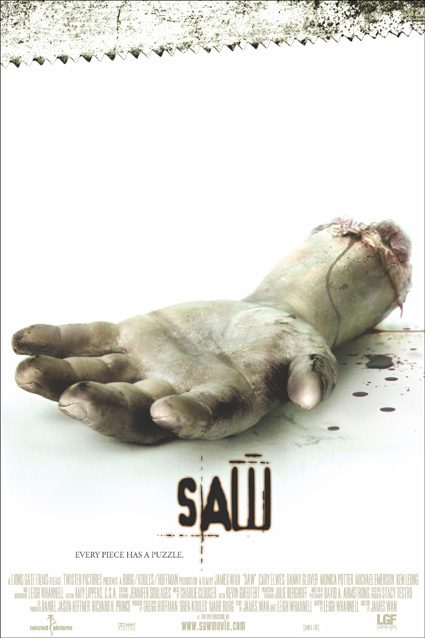
The wave of brutal 2000s horror represented by Saw and Hostel was often called "torture porn."
To understand this era only as an escalation of blood and bodily mutilation is to miss its central fear: the victim's loss of control over their own body and surroundings.
- The victim has already been abducted.
- They do not know who imprisoned them.
- They must follow rules made by the perpetrator.
- They must choose within a limited time.
- To survive, they must mutilate themselves or someone else.
- The police and state institutions fail to rescue them in time.
On the surface, the victim is offered choices. But the victim did not create the conditions under which those choices must be made.
The era's defining fear can be summed up in one sentence:
There are choices, but there is no freedom.
Post-9/11 fear and torture imagery
The 2000s brought 9/11, the wars in Afghanistan and Iraq, controversies surrounding detention at Guantanamo and torture at Abu Ghraib, relentless coverage of terrorism, and intensified surveillance.
Several film scholars read movies such as Saw and Hostel against this political and social backdrop. Torture, confinement, vulnerability in a foreign country, and attacks by unknown perpetrators resonated with anxieties of the post–War on Terror era. Still, 9/11 did not single-handedly produce these films. It makes more sense to see them as a meeting point between the traditions of exploitation, slasher, and body-horror cinema and the social mood of the time.
Is the audience an accomplice, or an observer?
The films of this era place the audience in an uncomfortable position.
Viewers empathize with the victim's pain even as the camera invites them to study it in detail. Just as the perpetrator watches the victim make a decision, the audience waits outside the frame for that same choice.
Brutal horror therefore produces two responses at once.
One is a survival exercise: "What would I do?" The other is the voyeuristic guilt of watching someone else suffer.
There is also a sense of accomplishment in making it through an intense scene. But as filmmakers keep trying to outdo one another in cruelty, disgust and fatigue can overtake fear, pushing audiences to look for a different kind of horror.
Representative works include Saw (2004), Hostel (2005), [REC] (2007), Paranormal Activity (2007), Martyrs (2008), and The Strangers (2008).
Generation 7: Trauma, Identity, and Social Structures
2010s
Mental illness is not the monster; the wound itself becomes the story
Psychology and psychoanalysis did not suddenly enter horror in the 2010s. Films concerned with the inner life and the mind—The Cabinet of Dr. Caligari, Dr. Jekyll and Mr. Hyde, and Psycho—had existed for decades.
What distinguished the 2010s was that trauma, depression, grief, parenting, family relationships, and questions of identity were no longer background explanations for fear. They became the central concerns of the films themselves.
Where some earlier films explained that "this person is dangerous because they are insane," major horror films of the 2010s asked different questions.
How does grief that was never fully processed break a person down?
How much responsibility does an individual bear for a wound inherited from family?
What happens when society continually makes someone doubt their own mind?
Can the monster and trauma really be separated?
A family's wound takes supernatural form
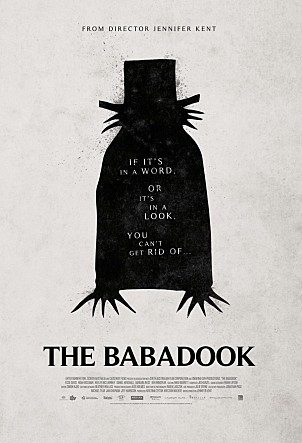
The monster in The Babadook gives form to the grief, anger, and burden of parenting carried by a mother who has lost her husband. The ending, in which the creature is not destroyed but must be acknowledged and managed, suggests that trauma cannot simply be removed. The BFI likewise interprets the film as a monster story that brings together grief, depression, and the pressures of motherhood. In Hereditary, family secrets and wounds pass from one generation to the next. In Midsommar, the collapse of a romantic relationship and a longing for belonging become entwined with the terror of a religious community. In The Witch and The Wailing, faith and community do not protect the characters; they make it nearly impossible to know whom to suspect.
The monster of this era does not exist solely outside the protagonist. It cannot be easily separated from memory, family relationships, or social identity.
Social structure becomes the monster
On the surface, Get Out takes place among a cultured, progressive white family. It reveals racism not through overt hatred, but through flattery, praise, and the desire to possess someone else's body.
Though surrounded by people, the protagonist is continually pushed to doubt his own senses and judgment. The "Sunken Place" visualizes the loss of control over one's body and voice. The film is widely regarded as a defining work of 2010s social horror, using the genre's grammar to explore race, liberal hypocrisy, and cultural appropriation.
Horror films of the 2010s do more than startle the audience. They keep viewers inside the characters' wounds and relationships, often leaving them to decide whether a supernatural event is real or a psychological manifestation.
The psychological effect is closer to emotional identification and self-reflection than simple shock.
Instead of asking, "Will the monster catch me?" the audience is prompted to wonder:
Does my family, too, have an unresolved wound?
Am I also turning away from another person's pain?
Is what I believed to be an individual problem actually structural?
Representative works include The Babadook (2014), It Follows (2014), The Witch (2015), Get Out (2017), The Wailing (2016), Hereditary (2018), Midsommar (2019), and Us (2019).
Generation 8: Fear as the Collapse of Reality's Rules and Meaning
2020s onward
Spaces that are frightening even without a monster
Because the horror of the 2020s is still taking shape, it is difficult to define it as a completed generation. Even so, the Backrooms, liminal spaces, analog horror, and internet-based fear share a recognizable sensibility.
This fear does not necessarily require a killer or a ghost.
- A shopping mall where the lights are on but no one is there
- An office corridor that repeats endlessly
- A school with no class and no students
- An underground passage with no discernible destination
- A malfunctioning emergency broadcast
- A face that looks human but is subtly wrong
- A space where the system keeps running even though no one is in charge
Nothing about these places is obviously dangerous. They are supposed to feel safe and familiar.
Yet the people, purpose, and sense of time that once made them function have vanished.
The mall remains, but there are no consumers.
The school remains, but there is no class.
The corridor remains, but there is no destination.
The broadcast continues, but it carries no reliable information.
Liminal horror is not simply about empty space. It is about a space that remains after the meaning that once made it understandable has disappeared.
COVID-19 and an unending in-between
The Backrooms and liminal-space imagery emerged online before COVID-19, so the pandemic cannot be credited with creating the genre.
What the pandemic did was give people a lived experience of liminal space.
Airports, schools, offices, and malls remained, but the people disappeared. Home became a place to rest, attend school, work, and quarantine all at once. Dates and daily rhythms blurred into a prolonged state of waiting, with no way to know when normal life would return.
A liminal space is, by definition, somewhere we pass through on the way from one place to another. Corridors, stairways, waiting rooms, and airports are typical examples.
When the journey never ends and the in-between state becomes permanent, that space turns frightening.
The uncertainty that today's young people face around employment, housing, relationships, and the future follows a similar pattern. They keep preparing and moving without knowing where they will arrive.
The Backrooms ultimately represents an endless in-between and an institutional space whose purpose remains unknown. More recently, it has also been interpreted as a form of "institutional Gothic," in which the ordinary character of bureaucracy and modern architecture—rather than a humanoid monster—becomes the threat.
Why imitate old footage?
Although analog horror is created for YouTube with digital editing tools, it imitates old VHS tapes, educational broadcasts, local news, and emergency alerts.
That dated look evokes two emotions at once.
The first is nostalgia. Childhood television, classroom films, public-service announcements, and videotapes recall a simpler, safer past.
The second is uncertainty. Low resolution and visual noise make it difficult to tell whether a shape in the corner is a person or a glitch. Captions and voices presented as official guidance may lead the viewer into danger instead.
Analog horror plays on the following fears:
The past I remembered as safe may not actually have been safe.
I cannot trust official records and broadcasts.
I cannot tell whether I am seeing a glitch or a real presence.
Works such as Local 58, The Mandela Catalogue, and Gemini Home Entertainment do not end with a single finished film. Audiences assemble clues and expand their worlds through videos, comments, fan theories, and wikis.
In this respect, analog horror is closer to a collaboratively built ghost story—the digital folklore of the internet age—than to conventional cinema. Recent research likewise analyzes it as a form of modern folklore that circulates through online participation and transformation.
Beings that look human but are not
Gen 8 horror frequently features people whose faces and movements are subtly distorted.
The eyes or mouth are too large. A smile lasts too long. The voice and lips fall out of sync. They speak like human beings, but their expressions and emotional timing do not quite match.
A creature that looks entirely monstrous is easy to classify. Something almost human, with only one feature out of place, is much harder to judge.
Research on the uncanny valley shows that human resemblance alone does not always produce fear. Discomfort can intensify when mismatched features are combined—an artificial eye in an otherwise realistic face, for example, or abnormally large eyes. That unease also fits a present in which cosmetic AI, virtual humans, and synthetic voices have entered daily life.
We can no longer be entirely certain whether a face on screen belongs to a real person or was generated by an algorithm. Modern horror therefore takes us one step beyond the question, "Is that person going to attack me?"
Is that really a person?
Is this recording real?
Can I trust the standards by which I judge reality?
Representative works include Host (2020), We're All Going to the World's Fair (2021), Skinamarink (2022), Talk to Me (2022), I Saw the TV Glow (2024), and Local 58, The Mandela Catalogue, and Kane Pixels' The Backrooms.
Gen 8 cannot be classified by "representative films" alone. Its newest grammar of fear is developing first on YouTube, in games and web series, and across online communities rather than in movie theaters.
The History of Horror Cinema Is the Story of a Moving Monster
Viewed as a single history, these eight generations reveal how fear has gradually moved from place to place.
At first, the monster lived in the castle, the tomb, and the laboratory.
Then it invaded nations and cities from outer space and beyond their borders.
From there, it entered the home, the family, religion, and the neighborhood.
In the 1980s, it became a brand that stalked teenagers across sequel after sequel.
In the early 2000s, it traveled through videotapes, photographs, telephones, and the internet.
Then the system that imprisoned people and controlled their bodies and choices became the monster.
In the 2010s, it moved inward and into social structures—trauma, family relationships, race, and class.
Finally, horror in the 2020s began to unsettle the human faculties we use to judge reality, rather than centering on any single monster.
In one line per generation:
Gen 1: The boundary between human and monster breaks down.
Gen 2: An unseen enemy infiltrates the community.
Gen 3: Family, neighbors, and religion are no longer safe.
Gen 4: Knowing the killer's rules still cannot save you.
Gen 5: A medium once trusted to show reality becomes a channel for fear.
Gen 6: You are offered choices but denied genuine freedom.
Gen 7: The monster lives within personal wounds and social structures.
Gen 8: The standards for judging what is real and human disappear.
Why Do People Choose Fear That Fits Their Era?
People do not carefully analyze social problems and then consciously select horror films that match them.
They are simply more likely to respond to stories that resemble the emotional climate of their time.
Cold War audiences responded to images of infiltration and nuclear destruction; audiences in the 1970s responded to the collapse of family and authority. The generation that watched the internet enter everyday life responded to infection through screens and networks. Today's audiences respond to spaces stripped of meaning, falsified records, beings that imitate humans, and systems with no one in control.
Horror does not explain reality as it is. It exaggerates and transforms emotions we experience in the real world but struggle to name.
Anxiety about the future may be too abstract to grasp, but an endlessly repeating corridor is easy to see.
The feeling of being controlled by social structures is vague, but the sealed rooms and rigid game rules of Saw are immediately legible.
A wound inherited from family is invisible, but the curse and evil spirit in Hereditary can appear on screen.
The confusion created by deepfakes and artificial intelligence is complex, but a face that smiles like a person while moving in an inhuman way creates instant discomfort.
This is how horror reflects society.
A horror film is not a mirror that copies reality directly. It is a distorting mirror that transforms real-world anxieties into monsters, spaces, and stories.
Inside that mirror, people experience anxiety in a form more extreme than real life, yet safer and easier to understand.
When we watch horror, we choose fear, search for its rules, and endure until the end. Some research found that horror fans reported greater psychological resilience during the early months of COVID-19, while fans of preparedness genres such as disaster, zombie, and alien-invasion stories reported feeling better prepared. Those findings can be interpreted in light of horror's role as a simulated experience. Still, the relationship is correlational, so it does not prove that watching horror automatically makes anyone more resilient.
The grammar of horror changes over time not because people have become crueler or more fearful than earlier generations.
It is because the forms that helplessness takes have changed.
If horror once asked, "Will that monster kill me?" modern horror asks:
Is the reality I believe in real?
Are there rules in this world that I can understand?
Am I choosing, or am I being steered toward a choice?
Is the being in front of me really human?
Am I living inside a system that no one controls?
The monster's appearance keeps changing, but horror cinema continues to serve much the same purpose.
Horror films give shape to the anxieties an era struggles to put into words. When audiences stare at the monster on screen, they are really looking back at the world they inhabit.